Wardley Mapping: Build vs Buy Decisions as Code
Wardley Mapping turns build vs buy debates into a reviewable text file. Draw a Wardley map as code, mark what blocks change, and keep it beside your ADRs.
Best practices and methodologies for software architecture

Wardley Mapping turns build vs buy debates into a reviewable text file. Draw a Wardley map as code, mark what blocks change, and keep it beside your ADRs.

Organizational understanding decides whether a capability lands. The technology ships and works, but the organization never adapts, so it sits unused.

Score your architecture practice against TOGAF's Architecture Capability Framework, not the business, with a maturity model you can defend to a CIO.

Inside a single telco, "Service" means four different things across four different teams. This is the problem data mesh was built to solve and why getting the canonical model right matters more than any platform decision.

Most architecture debates are not about the wrong answer. They are about tradeoffs nobody made explicit. ATAM is the method that forces both pans of the scale to be loaded before anyone decides.

Every squad reinventing the same deployment pipelines, logging stacks, and secrets management. Sound familiar? Here is how Internal Developer Platforms end the cycle and let your engineers focus on what actually matters.

A passkey registered on bank.com will not activate on bank-secure-login.com. The cryptography enforces the boundary without asking the user to spot the fake. This post covers why traditional MFA keeps failing, what the 2025 adoption numbers actually say, and how to run a working passkey demo on your own machine in 20 minutes.

Most teams consult specifications when things break. Spec-driven development turns that around, making the spec the source of truth before a single line of code is written. This post covers the four pillars of SDD, a step-by-step Claude Code walkthrough using FHIR validation, the current tooling landscape, and an honest look at where the practice still falls short.

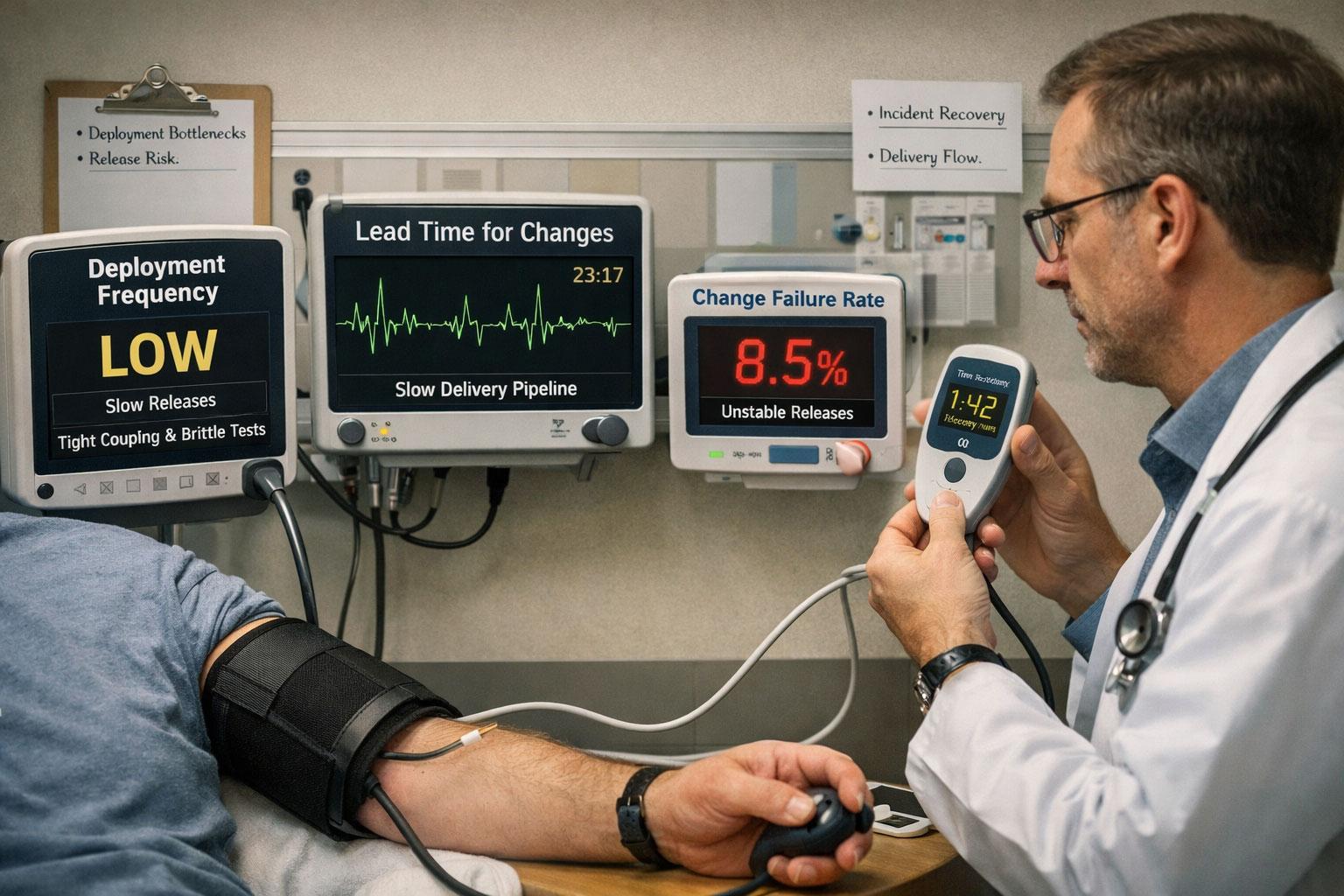
DORA metrics give architects objective feedback on whether their decisions are helping or hurting. Learn how to use all five metrics, including the 2025 addition of Rework Rate, to measure delivery performance, identify bottlenecks, and make the case for architectural change with data.

Fastify delivers 2x the throughput of Express with lower P99 latency, schema-based validation, first-class TypeScript support, and a plugin system built for encapsulation. Here is what makes it worth the switch and how to migrate without a full rewrite.

Server-Sent Events give you HTTP-native server push without the cost of WebSockets. When to reach for SSE, and how to stream it from ASP.NET Core.

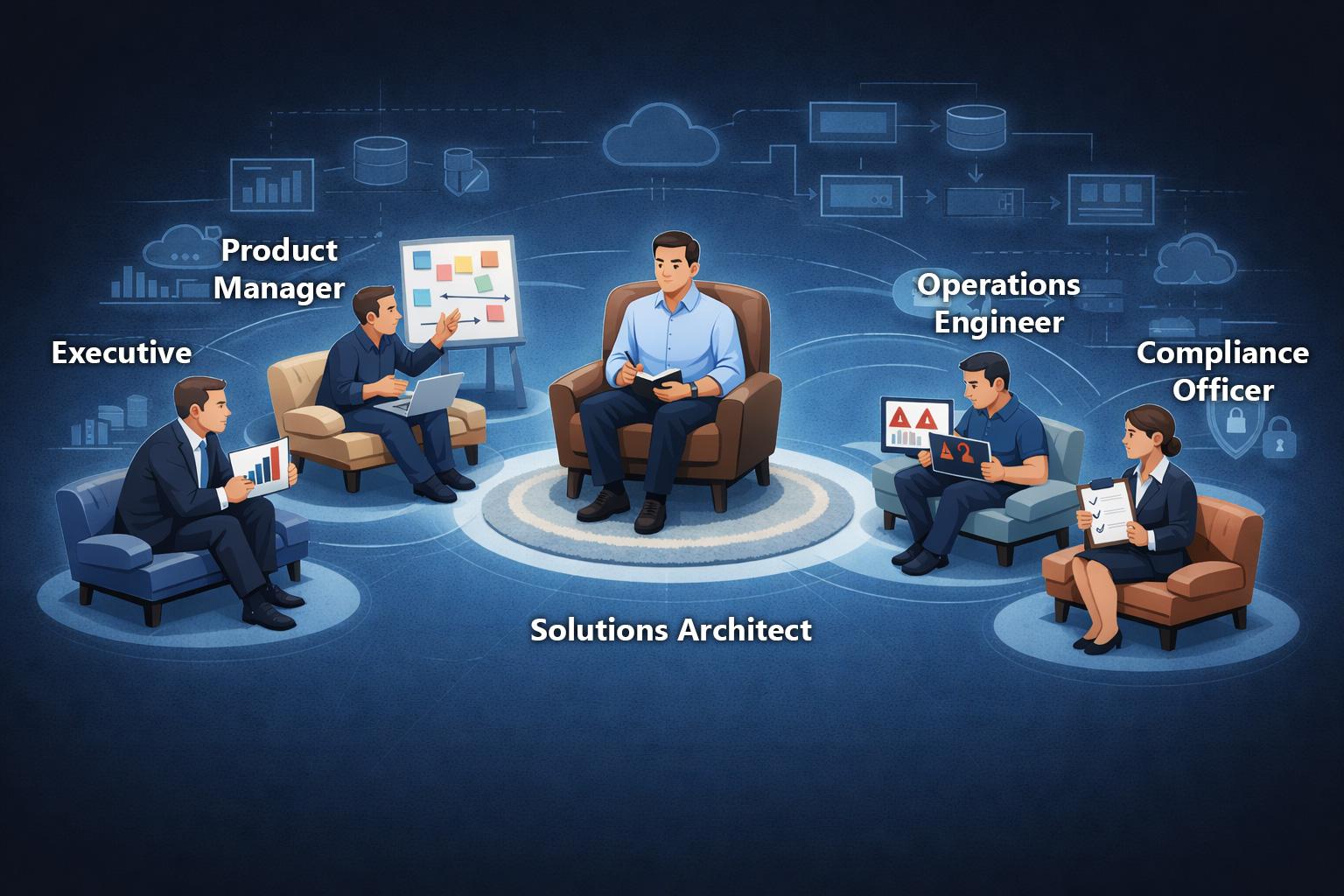
Solutions Architects live at the intersection of strategy and execution, business and technology, governance and innovation. Here's what that really means, and why being good at this job is more about multiplication than addition.

Discover why reusing existing solutions before buying commercial tools and building custom ones can save your team time, money, and resources.

A senior architect at a healthcare tech company was presenting their new microservices platform to the executive team. Fifteen minutes in, the CTO interrupted: "Wait, so where does this actually run? Are we talking containers? VMs? Which cloud regions?" The architect pulled up what they thought was their deployment diagram: A tangled mess of boxes, lines, and AWS icons that looked like it had been designed by a caffeinated spider. The CTO squinted at the screen, then at the architect, then back at the screen. "I’ll just... ask the DevOps team later."

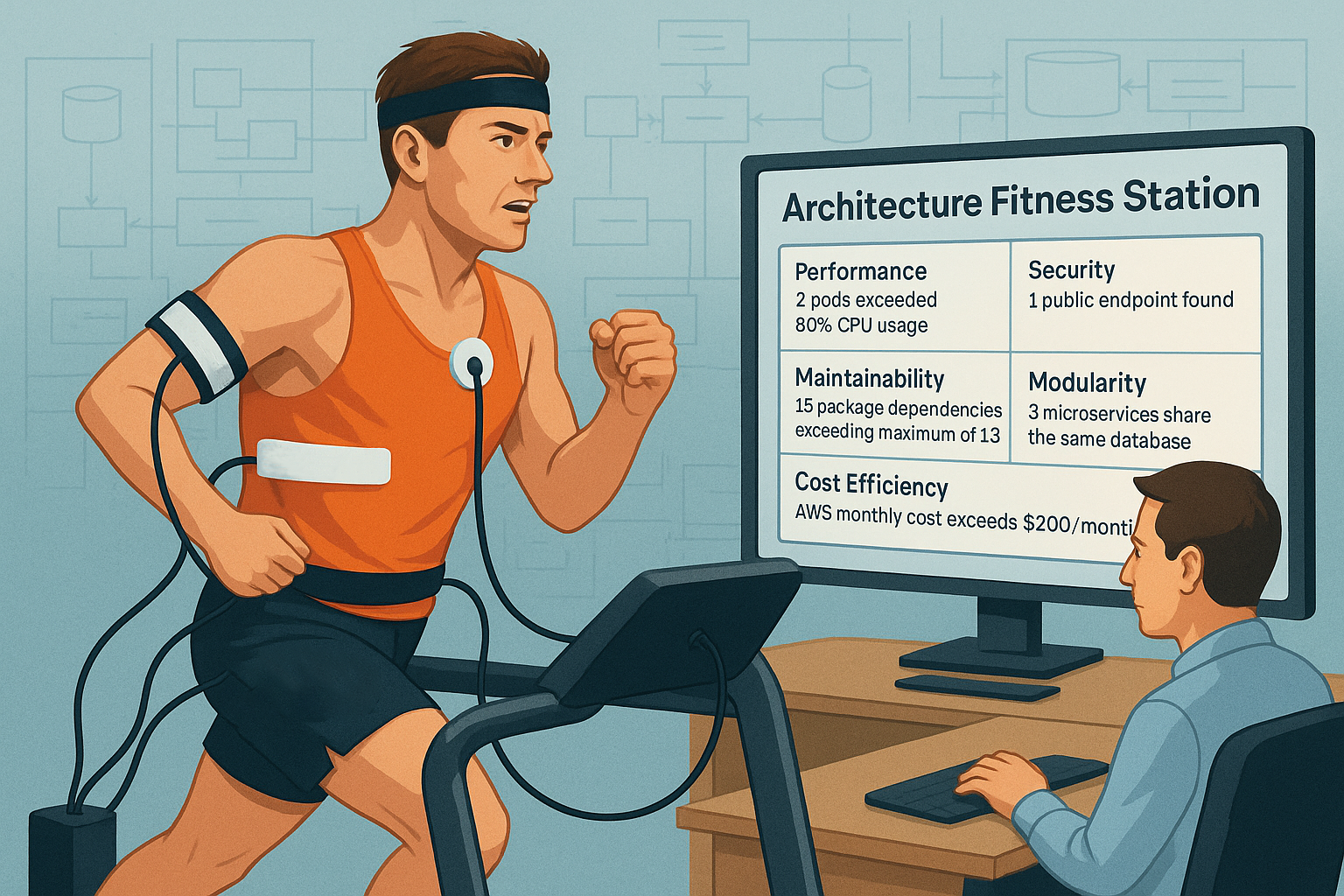
"How do we know the architecture is still good?" I remember the question clearly. It was halfway through a large-scale microservices migration at a fintech I was consulting for. The CIO asked it in a steering meeting, eyes scanning the room. Silence. Until one engineer muttered, “We hope so…”. That moment stuck with me. It echoed a deeper truth: without feedback loops, architecture drifts. The elegant diagrams fade, entropy creeps in, and assumptions go stale. That’s when I started embedding Architecture Fitness Functions into every significant architecture I touched.

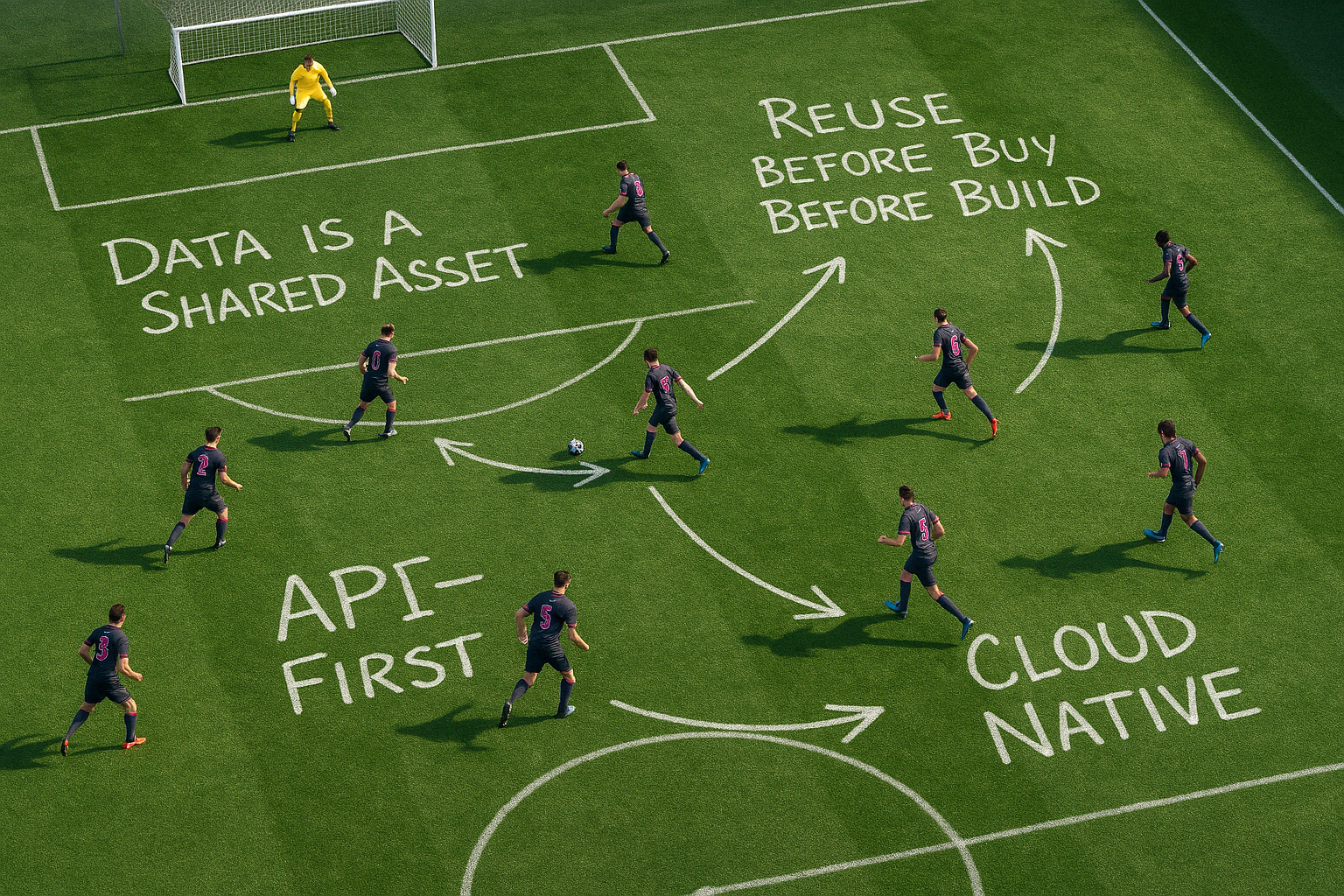
Picture a soccer team stepping onto the field, full of talent and energy, but without a playbook. Everyone has their own idea of what the next move should be. Chaos ensues. There are moments of brilliance, but no consistency, no strategy, and ultimately, no win. This is what enterprise transformation looks like without architecture principles. These principles are not just corporate buzzwords or procedural fluff. They are your playbook, the guiding strategies that help every part of your organization move in sync toward a common goal.

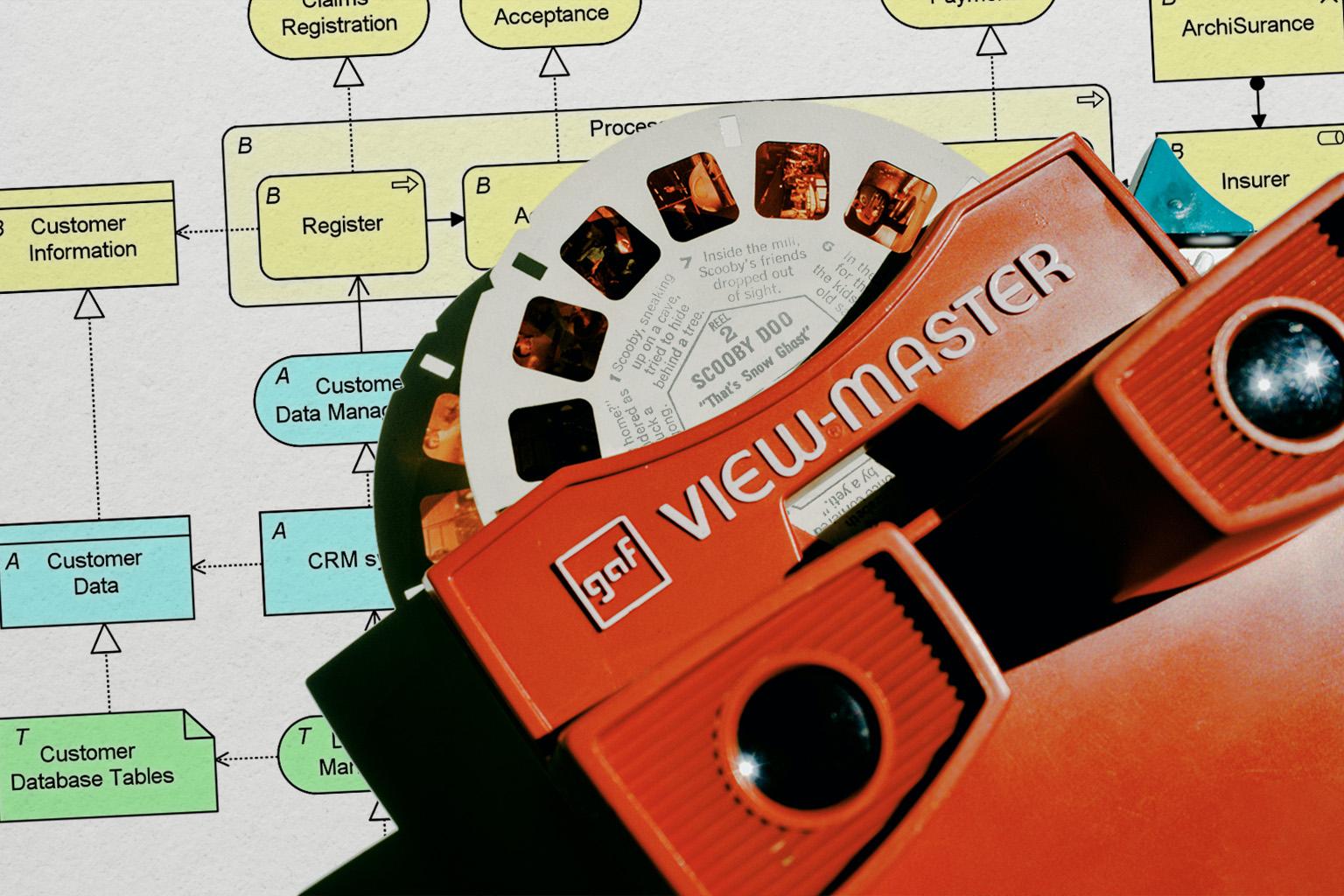
Imagine you’re a kid again, holding a red plastic View-Master in your hands. You pop in a reel, click the lever, and like magic, a new scene appears. Each click gives you a different perspective: Scooby Doo, dinosaurs, the Grand Canyon, space adventures. The magic lies not in the toy itself, but in how it delivers views tailored to your curiosity.