
Quality & TestingGovernance
Accessibility Testing: What axe-core Cannot See
Axe-core catches about 57% of accessibility issues by one count. Here is what it cannot see, and who should own the rest.
18 min read
Testing strategies and quality assurance
Axe-core catches about 57% of accessibility issues by one count. Here is what it cannot see, and who should own the rest.

Agentic fitness functions use a calibrated AI agent to judge architecture drift a script cannot, and post a verdict without blocking the build.

A high coverage number can hide tests that never verify real behavior, tests that run every line without checking whether the logic is actually correct. Mutation testing exposes those gaps by deliberately breaking your code and checking whether any test notices, turning test quality into a number you can measure instead of assume.

It was 2:47 AM when Sarah, a principal architect at a rapidly scaling SaaS company, finally admitted defeat. She’d been debugging for six hours, trying to untangle a "quick refactoring" that had somehow metastasized into 847 lines of changed code across 23 files. The tests were failing in mysterious ways, her Git diff looked like a Jackson Pollock painting, and she couldn’t remember which of her "improvements" had actually broken things. Sound familiar?
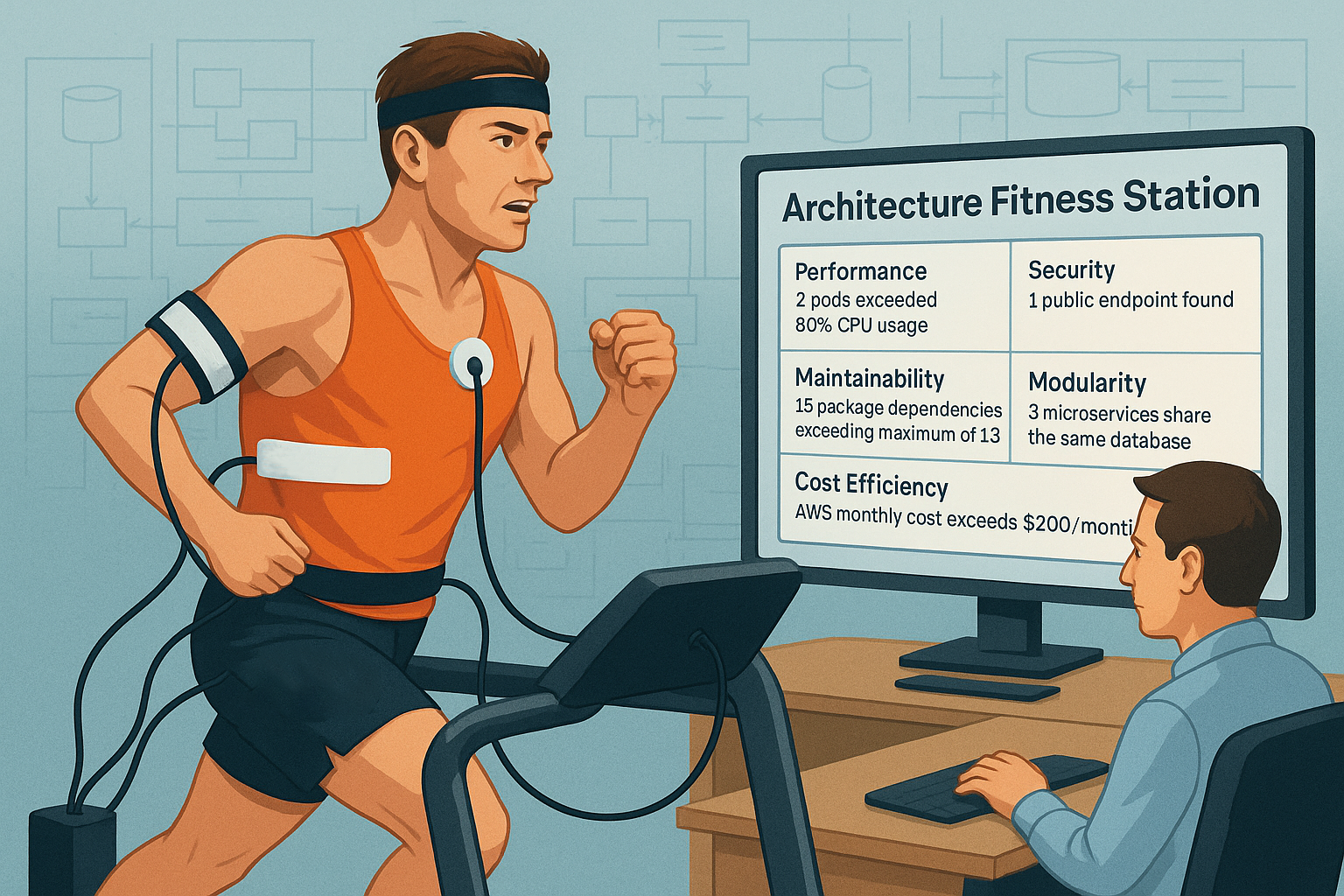
"How do we know the architecture is still good?" I remember the question clearly. It was halfway through a large-scale microservices migration at a fintech I was consulting for. The CIO asked it in a steering meeting, eyes scanning the room. Silence. Until one engineer muttered, “We hope so…”. That moment stuck with me. It echoed a deeper truth: without feedback loops, architecture drifts. The elegant diagrams fade, entropy creeps in, and assumptions go stale. That’s when I started embedding Architecture Fitness Functions into every significant architecture I touched.