Agentic AI Architecture Framework: Autonomy Per Use Case

I have been using agents in my own solution architecture work for a while now. Skills, knowledge, context and MCP, combined so an agent can work through a stack of documents, describe the baseline architecture, design a target architecture and run the gap analysis between the two. When it gets something wrong, the damage stays on my desk, because I am the one reading the output.
That setup raised a bigger question: what does it take to deploy agentic AI responsibly and effectively across an enterprise? The best answer I have found is an Agentic AI Architecture Framework built on three tiers. I like that approach a lot. I read the tiers a little differently from how they are usually presented, though, and that difference decides how you roll agents out.
The question matters for individual business use cases, and even more for cross-domain solutions where one end-to-end flow runs through several departments. At clients, the order I see is usually the wrong one: agent first, controls later. The demo impresses, the business case looks obvious, and the gateway, the audit trail and the data rules arrive once the agent is already connected to something that matters.
Every Cook Earns Their Station
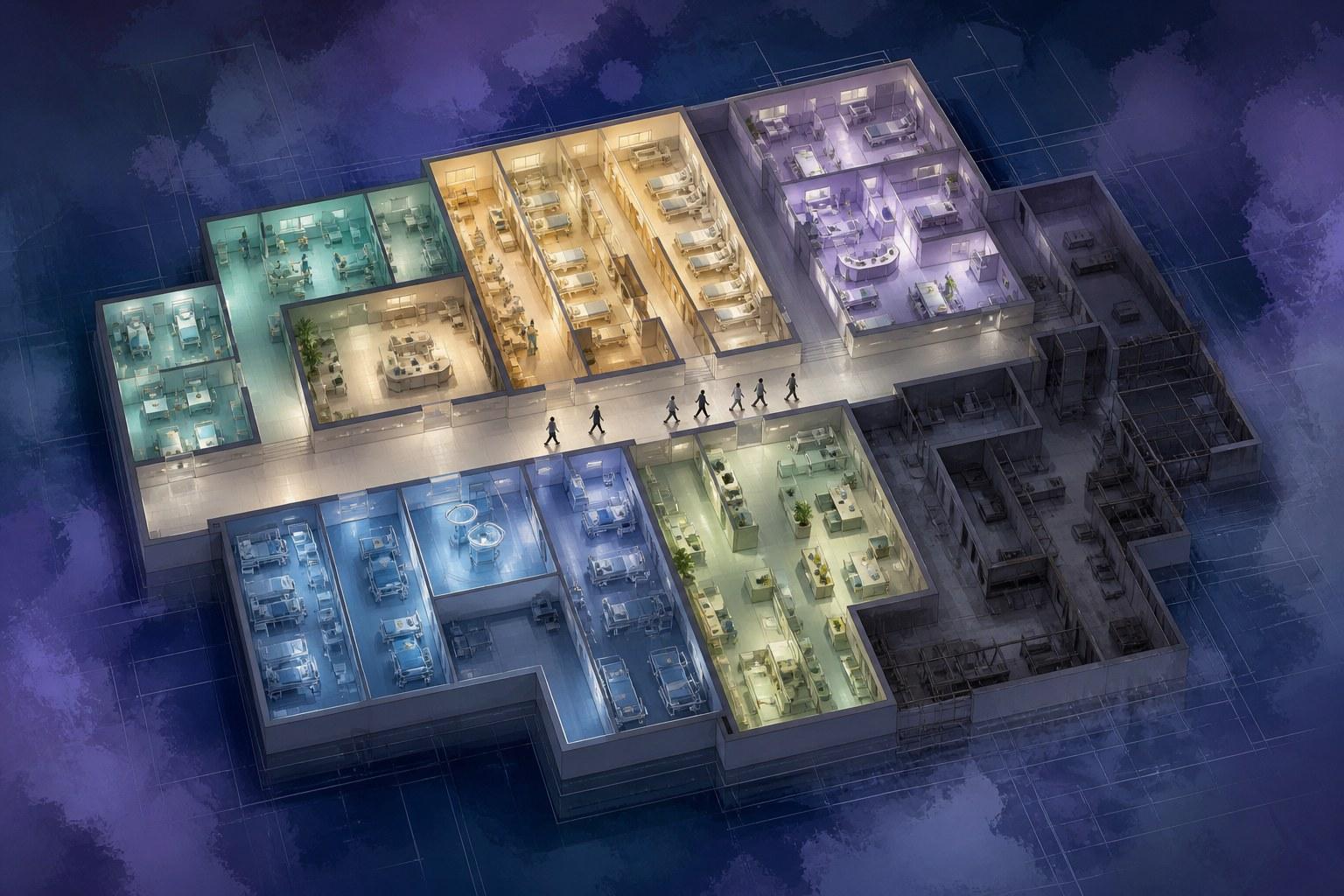
Think of a restaurant kitchen. Before anyone cooks, the kitchen itself has to be safe: knives in a locked drawer, a fridge full of labeled and dated containers, hand-wash sinks, a fire extinguisher, a written food-safety log. Every cook uses all of it, whatever their station. A junior cook starts at the prep station with a written recipe, and the head chef tastes each dish before it reaches the counter where dishes leave the kitchen. A senior cook is told "make tonight's special" and picks the ingredients and the steps alone, within the food budget and the allergy rules. The ticket printer and the food-cost sheet keep score, and a station that overspends or backs up gets stopped.
Cooks move up to a new station when few dishes come back from the one they have. And trust is given per task. The same cook may chop alone, but not season the final sauce alone.
In a kitchen, autonomy belongs to a cook doing a specific task, and it is earned with evidence. Agentic AI should work the same way.
The Agentic AI Architecture Framework in Three Tiers
The framework is a maturity progression. Each tier relies on the controls of the one below it.
Foundation, "Controlled Intelligence", has three parts. Tool orchestration with enterprise security: API gateways, role-based access control, detection of adversarial input, circuit breakers, and tracking of cost, tokens and security events. Reasoning transparency with continuous evaluation: auditability, monitoring for bias and hallucination, confidence scoring. And data lifecycle governance: classification, encryption, purpose limitation, consent, retention and deletion. None of it makes a good demo. All of it is what makes the other two tiers possible.
Workflow, "Structured Autonomy", puts agents inside constrained autonomy zones with mandatory human checkpoints, and the zones grow as outcomes are measured. This tier builds on the five patterns from Anthropic's Building effective agents, such as prompt chaining, routing and orchestrator-workers.
Autonomous, "Dynamic Intelligence", adds goal-directed planning within ethical, cost and safety constraints, adaptive learning, and multi-agent collaboration. It belongs in controlled environments, with regulatory approval where the law requires it.
| Tier | What the agent decides | Where the human sits | Kitchen equivalent |
|---|---|---|---|
| Foundation | Which approved tool to call, through gateways it cannot bypass | Owns access rules, data classification and budgets | The kitchen itself: locked knives, dated fridge, safety log, food-cost sheet |
| Workflow | The next step on a predefined path | At mandatory checkpoints before anything takes effect | Junior cook with a recipe, head chef tasting each dish |
| Autonomous | Its own plan towards a goal | Sets the goal and the constraints, reviews outcomes | Senior cook making tonight's special |
Where I Read the Agentic AI Framework Differently
Read as a rollout plan, the tiers describe an organization climbing together. First everyone builds the Foundation, then everyone does Workflow, then a brave few try Autonomous. I think that is half right.
The Foundation Is Shared, and Never Finished
The Foundation is the one tier every use case shares, so it belongs to the platform: built once, used by everyone. It also never reaches done. New tools arrive, new data sources get connected, and each one needs its place in the gateway, the access model and the data classification.
Read-only access belongs here too. An agent that can only read cannot break anything, which makes it tempting to skip the controls. It can still leak sensitive information to someone who should never see it, and every document it reads is a possible carrier for prompt injection.
Each Use Case Climbs on Its Own
Above the Foundation there is no single ladder. Each use case climbs on its own, at a speed set by its business impact and by the trust it has earned. An agent summarizing internal documents and an agent changing customer contracts should not wait for each other, or share one approval process.
Gartner reached the same conclusion from the other side. In May 2026 it warned that uniform governance across AI agents leads to failure, because it forces a binary choice: locked down or fully trusted. Its advice is to classify agents by autonomy level, each with its own trust boundary and controls.
Workflows should be as autonomous as possible, with minimal human intervention. How much intervention a step needs depends on the impact a change can have on the business. When a use case starts, the line leans towards human checkpoints. As trust in the agent's decisions grows, it moves towards autonomy.
Humans Keep the Policy at Every Tier
Autonomy applies to execution. Policy, governance and business priorities stay with people, at every tier. The agent picks the route. People decide where the business is going.
Trust Is Earned with Evidence, and Lost the Same Way
If autonomy is earned, you need something to measure. The two signals I would use are the human override rate, meaning how often a reviewer changes or rejects what the agent proposed, and the time without incident. A falling override rate over a long quiet period is a case for moving the line. A spike is a case for moving it back.
Moving it back has to be a normal, planned step. After a bad night, a cook goes back to prep with the head chef tasting everything again, and nobody calls it a firing. Gartner expects that by 2027, 40% of enterprises will demote or decommission autonomous agents after governance gaps surface in production.
This is also where the kitchen stops working. A cook learns and keeps their skills. An agent carries nothing forward, so a new model version or a changed prompt resets the trust it had earned, and the evidence has to be collected again. The head chef also tastes every dish. Agent oversight is usually sampled and delayed, and every review costs real money, which is why the line should move once the evidence allows it.
Cross-Domain Flows Need Contracts
The hardest case is the end-to-end flow that crosses domains. A single process might touch sales, finance and logistics, and a mistake costs something very different in each. One tier for the whole flow would either slow the safe parts down or expose the risky ones.
So each domain owns its rules and sets the tier for its own part of the flow. The boundary between domains becomes a contract: what an agent from the other side may ask for, which data it may receive, and what has to be confirmed before anything crosses.
Earn the Next Station
The rollout follows the tiers in four phases. I read the first two as platform work, done once and kept up, and the last two as steps each use case takes alone.
- Build the Foundation. The three parts above, plus a threat model, bias tests and written rules for working with agents: who reviews what, and who owns the policy.
- Prove it with a pilot. Pick a low-impact use case and show that the controls hold, costs are visible and people trust the output. Train the teams, and measure adoption next to the technical figures. An agent nobody uses proves nothing.
- Expand Workflow, one use case at a time. Start once the pilot has proven the Foundation and monitoring is in place, then move the line as the override rate falls.
- Explore Autonomous where the evidence allows. In a controlled environment, with safety monitoring, the approvals your sector requires, and a person who can stop the agent. The EU AI Act requires human oversight for high-risk systems, so plan for it now.
Stepping back a tier stays part of the plan. Through every phase, security, governance and trust stay central, and so do the people who work with the agents.
The three-tier framework gives us the right map. Use it as a path each use case walks at its own pace, on top of a kitchen everyone keeps clean. In the next four posts, one a week, I build the tiers hands-on, so the controls stop being boxes on a slide.
Which of your agents has more freedom today than its controls can carry? If the model underneath it changed tomorrow, would anyone notice that the trust it had earned was gone? And most importantly, who in your organization decides when an agent goes back to the prep station?
Share this article
Related articles

Reuse Over Custom Code: Why Solution Architects Must Break the Developer Mindset
Discover why reusing existing solutions before buying commercial tools and building custom ones can save your team time, money, and resources.
Architecture Capability Framework: Scoring Your Own Practice
Score your architecture practice against TOGAF's Architecture Capability Framework, not the business, with a maturity model you can defend to a CIO.

Data Mesh: Decentralization Without the Anarchy
Data mesh decentralizes data ownership to domain teams without losing a shared language. Why the canonical model matters more than any platform you pick for it.
Enjoyed this article?
Subscribe to get more insights delivered to your inbox monthly
No spam, unsubscribe anytime.
This site is protected by reCAPTCHA and the Google Privacy Policy and Terms of Service apply.